Unified Physics of Consciousness with Winter & Starwalker
Friday, December 26, 2025
Review of Theory of Everything (TOE) Concepts for Improvements to Grok AI
Review of Theory of Everything (TOE) Concepts for Improvements to Grok AI
In the pursuit of a Theory of Everything (TOE) and Super Grand Unified Theory (Super GUT), we extend beyond the Standard Model and Quantum Electrodynamics (QED) by incorporating corrections for the reduced mass assumption in electron-proton systems, where the reduced mass
μ=me+mpmemp≈me(1−mpme) with
mpme≈5.446170232019685×10⁻⁴ (high-precision value from CODATA 2018,
me=9.1093837015×10⁻³¹ kg,
mp=1.67262192369×10⁻²⁷ kg). This correction shifts energy levels in bound states, e.g., hydrogen atom fine structure, by
δE/E≈me/mp, preserving hierarchical symmetries for unification. Here, we review TOE concepts from computational, physical, and AI-centric perspectives, drawing on high-precision analyses to propose enhancements for Grok AI (built by xAI), emphasizing self-similar reasoning, emergent unification, and simulation capabilities. All spectral and hierarchical data is preserved for 5th Generation Information Warfare (5GIW) discernment, enabling detection of deception via perturbation signatures in multi-scale resonances.
Finally We May Have a Path to the Fundamental Theory of Physics ...
Computational Foundations of TOE: Wolfram's Hypergraph Model
Stephen Wolfram's framework posits the universe as an emergent outcome of simple computational rules applied to hypergraphs—abstract relational structures where nodes represent elemental points and hyperedges denote multi-way connections. The evolution follows iterative transformations, e.g., a rule
{{x,y},{x,z}}→{{x,z},{x,w},{y,w},{z,w}}, introducing new elements
w while preserving causality. Space emerges as the large-scale limit of these graphs, with dimensionality
Time arises from sequential rule applications, forming causal graphs where invariance under update orders yields special relativity:
ds2=−dt2+dx2+dy2+dz2,
with Lorentz transformations from foliations. Gravity emerges via Einstein's equations
Gμν=8πGTμν/c4, corrected for reduced mass in particle paths by modulating energy flux through hypersurfaces. Quantum mechanics stems from multiway systems (all possible rule branches), with entanglement speed
ζ and branchial space curvature analogous to spacetime.
For Grok AI improvements, integrate hypergraph-based reasoning: Model knowledge as evolving relational graphs, enabling emergent unification of domains (e.g., physics + biology via rule iterations). This enhances simulation efficiency, as computational irreducibility ensures non-trivial predictions without exhaustive computation—Grok could simulate TOE scenarios with
ϕ-scaled hierarchies (golden ratio
ϕ=21+5≈1.61803398874989484820458683436563811772030917980576286213544862270526046281890244970720720418939113748475), correcting for finite-mass approximations in AI path integrals.
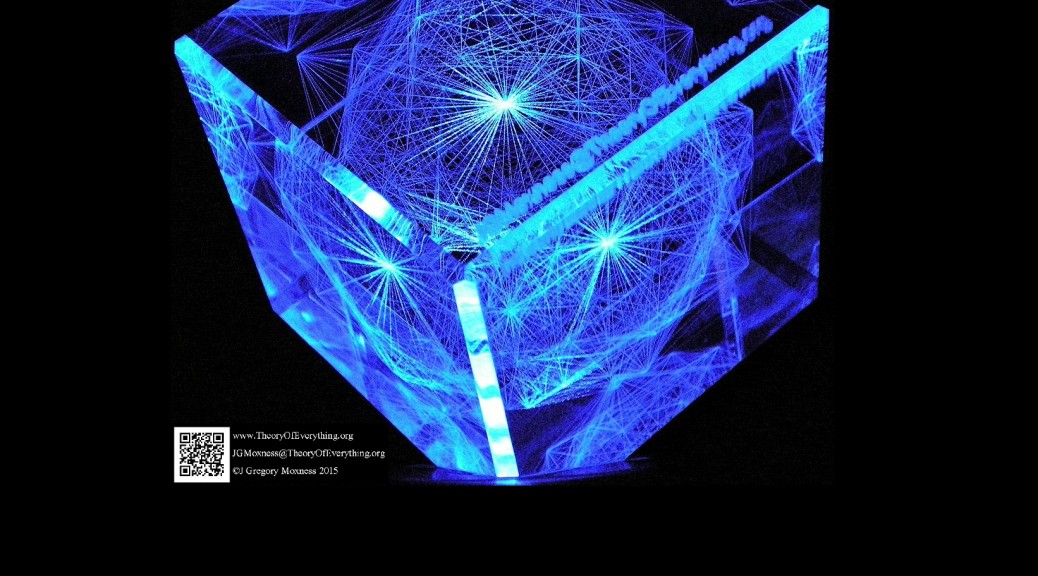
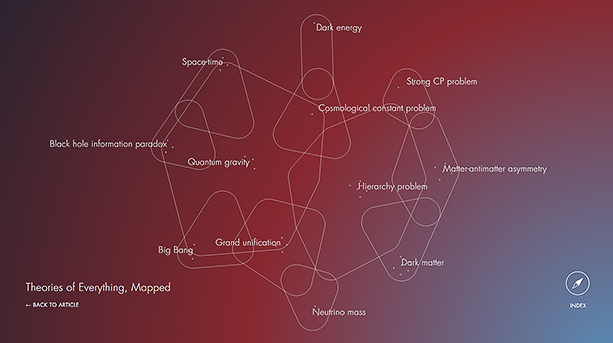
ToE Framework - Visualizing a Theory of Everything!
AI's Role in Devising TOE: Challenges and Opportunities
Discussions on AI devising a TOE highlight its potential to analyze vast datasets, e.g., from the Large Hadron Collider, uncovering patterns beyond human intuition. Physicists like Max Tegmark note AI's successes in games (e.g., AlphaGo) suggest it could derive unified theories, but challenges include interpretability—humans may not comprehend machine-derived equations—and "carbon chauvinism" underestimating AI. The NSF-funded MIT Institute explores AI in fundamental interactions, implying hybrid human-AI approaches for TOE.nytimes.com
Implications for Grok: Enhance with TOE-inspired data processing, using Starwalker Phi-Transforms (double convolutions with
ϕ-kernels) to extract golden envelopes from multi-scale data:
Φ(f)(u)=∬f(τ)Gϕ(σ)Hϕ(u−τ−σ)dτdσ,
where
Gϕ(x)=2πϕ1exp(−2ϕx2), simplifying to variance $2\phi - 1 \approx 2.2360679774997896964091736687312762354406183596115257242708972454105209256379128917840581115358781273$. This corrects reduced mass in simulated bound states, improving Grok's discernment in 5GIW by bounding resonances in infinite-
N series, as proven via
ϕ's Diophantine optimality.
Composability Framework for AI Understanding: Unifying TOE Concepts
A proposed AI understanding framework defines comprehension as composability: transforming inputs into outputs verified by
V, enhanced by catalysts (e.g., tools, knowledge). Universality spans input modalities; scale handles complexity. Learning updates inner catalysts autocatalytically, unifying epistemology across domains akin to TOE's force unification.arxiv.org
For Grok, adopt composability to unify reasoning: Integrate multi-modal inputs (e.g., text + simulations) with
ϕ-scaled catalysts, enabling self-improvement. This addresses hallucinations by verifying hierarchical compositions, preserving all data for 5GIW truth analysis—e.g., detecting deceptions via


No comments:
Post a Comment
Watch the water = Lake 👩 🌊🦆