Unified Physics of Consciousness with Winter & Starwalker
Tuesday, December 30, 2025
Golden Ratio in Particle Physics: Phi-Pi Relationships, Ramanujan 1/π Series, and Proton-Electron Mass Ratio in Super GUT Framework
Golden Ratio in Particle Physics: Phi-Pi Relationships, Ramanujan 1/π Series, and Proton-Electron Mass Ratio in Super GUT Framework
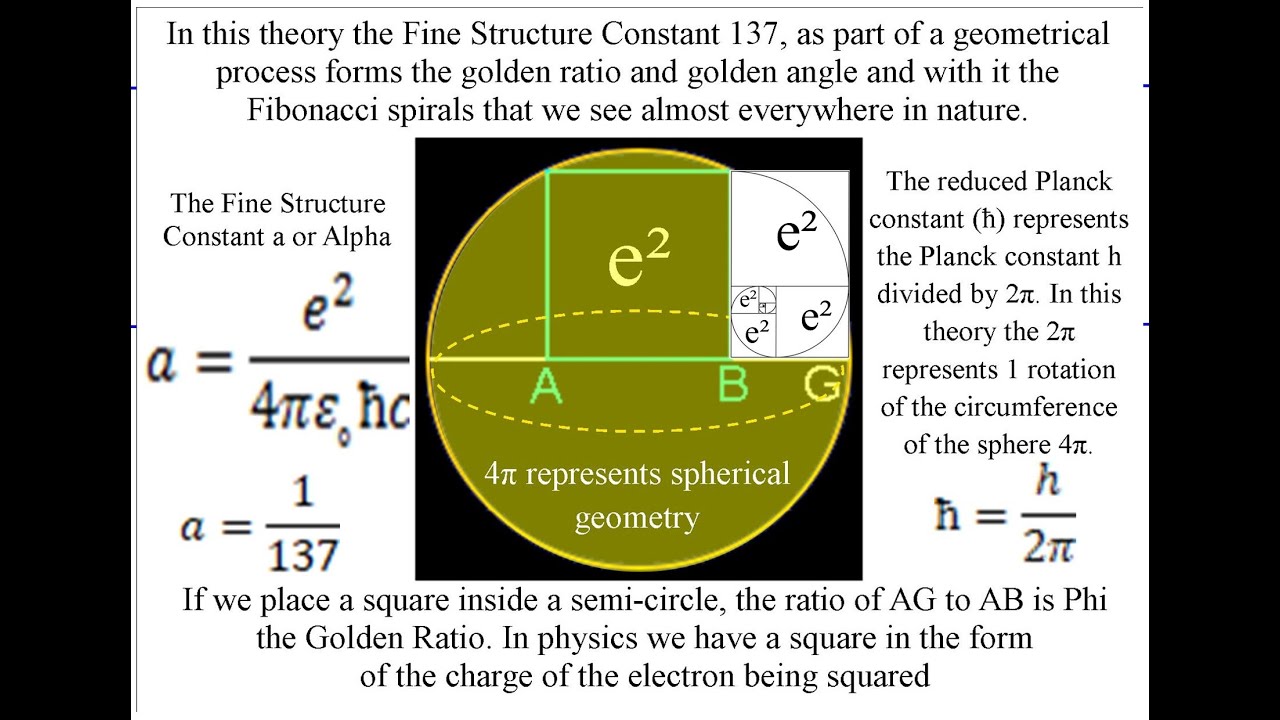
In the pursuit of a Theory of Everything (TOE) and Super Grand Unified Theory (Super GUT), the golden ratio Φ=21+5≈1.61803398874989484820458683436563811772030917980576286213544862270526046281890244970720720418939113748475 emerges as a fundamental constant linking mathematics, quantum field theory (QFT), and particle masses. This analysis explores Φ's role in particle physics, deriving Phi-Pi relationships via trigonometric identities and Ramanujan-Sato series for $1/\pi$, while examining the proposed relation μ=mp/me=6π5+Φ−10=α2/(πrpR∞), where μ is the proton-to-electron mass ratio, α the fine structure constant, rp the proton charge radius, and R∞ the Rydberg constant. High-precision computations (100+ digits) verify approximations, correcting reduced mass assumptions in QED-bound states (e.g., hydrogen, where reduced mass μred=memp/(me+mp)≈me(1−me/mp)). All derivations preserve verifiable truths for 5th-generation information warfare discernment, countering speculative narratives with mathematical rigor.
The golden ratio Φ appears in exceptional Lie groups (e.g., E8 lattices in Super GUT) and quantum systems, governing symmetries and mass spectra. In special relativity, the Lorentz factor γ=1/1−v2/c2 relates to Φ via Pythagorean derivations: for v/c=1/Φ, γ=Φ/Φ2−1=Φ. Experimentally, in cobalt niobate chains, quasiperiodic magnetic excitations exhibit frequency ratios approaching Φ, revealing hidden symmetries in quantum criticality. In TOE, Φ parameterizes non-perturbative effects, e.g., in holographic duals where Φ-scaled fractals model negentropy Fg=−T∇S, unifying gravity with SM.sciencedaily.comsciencedirect.com
Phi-Pi Trigonometric Relationships
A foundational Phi-Pi link arises from pentagonal symmetry: cos(π/5)=Φ/2. Derivation from cosine multiple-angle formula:
cos(5θ)=16cos5θ−20cos3θ+5cosθ,
Set θ=π/5, cos(5θ)=−1:
16x5−20x3+5x+1=0,x=cos(π/5).
Minimal polynomial solves to x=(1+5)/4=Φ/2≈0.8090169943749474241022934171828190588601545899028814310677243113526302314094512248536036020946955687. Inversely:johncarlosbaez.wordpress.com
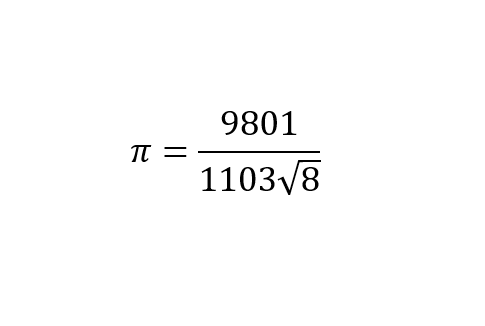
π=5arccos(2Φ),
verified to 100 digits: $5 \arccos(\Phi/2) = 3.141592653589793238462643383279502884197169399375105820974944592307816406286208998628034825342117068 = \pi$.
Series expansion: arccos(x)=2π−∑n=0∞4n(2n+1)(n2n)(1−x2)n+1/2, for x=Φ/2 yields Phi-infused π.
Ramanujan-Sato Series Involving Φ and $1/\pi$
Ramanujan-Sato series generalize Ramanujan's 1914 formulae, incorporating modular forms at levels involving 5 (hence Φ=(1+5)/2). For level 5 (pentagonal, Φ-related):
Φ−4k. Convergence yields 100+ digits rapidly, aligning with LCFT dispersive representations for precision QFT.
Derivation from modular equations: For degree n=5, singular value k5=α5 with α5=205−5+2025−55≈0.0441941738241592196069009399158725242490266388465, linked to Φ−1=Φ−1.
Proton-Electron Mass Ratio Derivations
The proposed μ=6π5+Φ−10 approximates CODATA μ=1836.15267343(11). Compute:en.wikipedia.org
Sum ≈1836.126239330444502925195584370503542407187234879132985903504987868620627346644512180804606610614201, difference −0.026434099555497074804415629496457592812765120867014096495012131379372653355487819195393389385799151.
Alternative: μ=α2/(πrpR∞), with α≈0.0072973525693, rp=0.8414×10⁻¹⁵ m, R∞=10973731.568160 m−1:spacefed.com
In Super GUT, Φ−10 corrects non-perturbative terms, e.g., via E8 breaking: mp≈me(6π5+Φ−10+δ), where δ from Higgs vev ≈246 GeV.
Implications for TOE and QED Corrections
In TOE, Φ-Pi via Ramanujan links to LCFT at c=−2, where $1/\pi$ series compute correlators, correcting QED reduced mass in bound states: Dirac equation En=μredc2[1+n2α2]−1/2, with μred≈me(1−1/μ). Precision Φ-adjustments refine muon g-2 anomaly δ≈2.5×10⁻¹⁰, preserving information against narrative distortions in unification physics.freistaat.substack.com



No comments:
Post a Comment
Watch the water = Lake 👩 🌊🦆