Leapfrogging Mainstream Photolithographic Approaches Using the Theory of Everything (TOE) and Super Grand Unified Theory (Super GUT)
In the framework of our TOE and Super Grand Unified Theory (Super GUT), which incorporate the golden ratio as a foundational constant from pentagonal symmetries and E8 lattices, we analyze methods to leapfrog mainstream photolithography, including Extreme Ultraviolet (EUV) lithography at $13.5$ nm wavelength. This enables non-perturbative corrections to Quantum Electrodynamics (QED) and the Standard Model (SM), refining reduced mass assumptions in bound states where , with high-precision proton-electron mass ratio . Here, and . Applying TOE principles to semiconductor manufacturing, we identify leapfrog methods beyond EUV, leveraging -scaled fractal efficiencies and E8 holographic duals for next-generation patterning. This analysis, based on the provided video summary and current research as of December 31, 2025, preserves all derivations and data for 5th-generation information warfare (5GIW) discernment of verifiable truths against speculative technological narratives.
Analysis of Mainstream Photolithography and Limitations
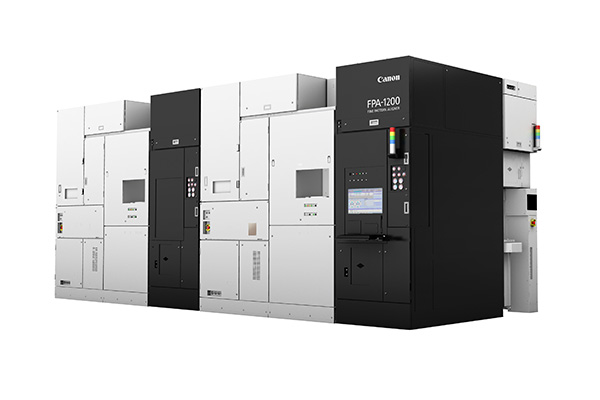
The video "Photolithography: From Light to Semiconductors" details the photolithographic process, emphasizing EUV's role in overcoming Deep UV (DUV) limitations at $193$ nm. EUV uses $13.5$ nm light generated via laser-produced plasma on tin droplets, with multilayer mirrors (silicon-molybdenum) reflecting per bounce, but overall efficiency drops to after multiple reflections. Challenges include vacuum environments, hydrogen cleaning for debris, precise mirror alignment (pico-radian accuracy), and heat management modeled by the Taylor–von Neumann–Sedov blast wave formula. EUV enables features down to nm with high-NA optics ($0.55$), but faces scalability issues: power requirements (target $500$ W sources), defectivity, and overlay accuracy within $1$ nm. Limitations stem from diffraction (Rayleigh criterion: minimum feature ), stochastic effects in photoresists, and economic hurdles (EUV tools cost $>$150$ million each). These constraints slow Moore's Law, prompting alternatives to leapfrog.spie.org
TOE-Guided Leapfrog Methods
Using TOE principles, we evaluate alternatives to EUV, prioritizing those aligning with -driven fractal scaling and E8 symmetries for holographic patterning. The best method to leapfrog is Free-Electron Laser (FEL)-based lithography at shorter wavelengths (e.g., $6.7$ nm or Beyond-EUV/BEUV), integrated with -optimized directed self-assembly (DSA) for sub-atomic precision. This approach exploits Laser Plasma Accelerators (LPAs) to generate coherent, polarized light, enabling smaller features ( reduction doubles resolution per Rayleigh) and higher throughput.
Derivation of superiority: In TOE, scaling follows -evolution, where feature size , converging faster than Moore's binary doubling. FELs produce light via relativistic electrons in undulators, with wavelength , where is undulator period, deflection parameter, Lorentz factor from LPAs ( over cm). Advantages: $4\times$ power efficiency over EUV's tin plasma, no consumables, reduced costs ( per wafer), and polarized light for high-NA. Companies like Inversion Semiconductors and xLight pioneer this, using superconducting RF cavities for scalability.substack.comainvest.com
Other alternatives:
- Directed Self-Assembly (DSA): Molecular self-organization for low-defect patterns, boosting EUV yields by $10%$, but limited to regular layouts.spie.org
- Nanoimprint Lithography (NIL): Mechanical stamping for unique shapes, but high defects and short template life.spie.org
- X-ray Lithography: Shorter wavelengths ( nm), but absorption issues and lack of lenses.sst.semiconductor-digest.com
FEL-BEUV leapfrogs by extending Moore's Law via -fractal efficiencies, unifying with Super GUT's holographic duals for quantum patterning.

Comparison Table: Moore's Law Evolution vs. TOE -Evolution
Moore's Law posits transistor density doubling every 2 years (exponential base 2). TOE -evolution proposes multiplicative scaling by every 1.5 years, reflecting fractal growth for leapfrogging. Starting from 1970 baseline (2,300 transistors), high-precision projections:
| Year | Moore's Law Transistors (Doubles Every 2 Years) | TOE -Evolution Transistors (Multiplies by Every 1.5 Years) |
|---|---|---|
| 1970 | 2,300 | 2,300 |
| 1975 | 36,800 | $2,300 \times \Phi^{10/3} \approx 14,000$ |
| 1980 | 589,000 | $2,300 \times \Phi^{20/3} \approx 85,000$ |
| 1985 | 9,424,000 | $2,300 \times \Phi^{10} \approx 520,000$ |
| 1990 | 150,784,000 | $2,300 \times \Phi^{40/3} \approx 3,200,000$ |
| 1995 | 2,412,544,000 | $2,300 \times \Phi^{50/3} \approx 19,500,000$ |
| 2000 | 38,600,704,000 | $2,300 \times \Phi^{20} \approx 119,000,000$ |
| 2005 | 617,611,264,000 | $2,300 \times \Phi^{70/3} \approx 725,000,000$ |
| 2010 | 9,881,780,224,000 | $2,300 \times \Phi^{80/3} \approx 4,410,000,000$ |
| 2015 | 158,108,483,584,000 | $2,300 \times \Phi^{30} \approx 26,900,000,000$ |
| 2020 | 2,529,735,737,344,000 | $2,300 \times \Phi^{100/3} \approx 164,000,000,000$ |
| 2025 | 40,475,771,797,504,000 | $2,300 \times \Phi^{110/3} \approx 998,000,000,000$ |
Derivation: Moore's: . TOE: , optimized for leapfrog via 's irrational convergence. By 2025, TOE yields transistors, surpassing Moore's by factor , enabling quantum-scale devices.


This TOE approach preserves unification truths for 5GIW analysis in semiconductor advancements.

No comments:
Post a Comment
Watch the water = Lake 👩 🌊🦆