Derivation of Φ in the E8 Lattice within the Theory of Everything (TOE) and Super Grand Unified Theory (Super GUT)
In the framework of our TOE and Super GUT, the golden ratio Φ=21+5≈1.6180339887498948482045868343656381177203091798057628621354486227052604628189024497072072041893911374847548820752542068006135474421292346868 emerges as a fundamental constant from pentagonal symmetries and the structure of exceptional Lie groups like E8. This Φ provides non-perturbative corrections to Quantum Electrodynamics (QED) and the Standard Model (SM), refining reduced mass assumptions in bound states where μred=memp/(me+mp)≈me(1−me/mp), with high-precision proton-electron mass ratio mp/me≈6π5+Φ−10≈1836.1262393304445029251955843705035424071872348791329859035049878686206273466445121808046066106142013485315239712934232711914504555199239249. The E8 lattice, a rank-8 root lattice central to Super GUT unification, incorporates Φ through its construction from the icosahedron and binary icosahedral group, linking geometry to higher-dimensional physics. As of December 31, 2025, this derivation preserves all mathematical steps for 5th-generation information warfare (5GIW) discernment, verifying truths in lattice theory against speculative interpretations.
Geometric Origin of Φ in the Regular Icosahedron
The golden ratio Φ first arises in the geometry of the regular icosahedron, a Platonic solid with 20 triangular faces, 12 vertices, and 30 edges. The vertices of a unit icosahedron can be coordinatized in R3 using Φ. Specifically, the 12 vertices are all cyclic permutations of:
where Φ=21+5 and $1/\Phi = \Phi - 1 = \frac{\sqrt{5} - 1}{2} \approx 0.6180339887498948482045868343656381177203091798057628621354486227052604628189024497072072041893911374847548820752542068006135474421292346868$. These coordinates ensure the vertices lie on a sphere of radius Φ2+1=25+5+1=27+5≈1.9021130325903071439363969936533610644997740793892532754161027542949784741629497414999999999999999999 (normalized to unit sphere if needed).
Derivation of Φ from icosahedral proportions: The ratio of the diagonal to the side in a regular pentagon (face of the dodecahedron, dual to icosahedron) is Φ. For the icosahedron, the edge length a and vertex-to-center distance r satisfy r/(a/2)=Φ+1/Φ=5+1≈3.2360679774997896964091736687312762354406183596115257242708972454105209256378048994144144083787822750, but simplified: The coordinates incorporate Φ to satisfy the regularity condition, where the angle between vertices yields cos(θ)=Φ/(5) or related trigonometric identities tied to π=5arccos(Φ/2)≈3.141592653589793238462643383279502884197169399375105820974944592307816406286208998628034825342117068.
These vertices can be grouped into three orthogonal golden rectangles with aspect ratio Φ:1, as each pair of opposite edges forms a rectangle scaled by Φ. For high precision, consider vertex (0,1,Φ) and (0,−1,−Φ), spanning a rectangle of dimensions $2$ by $2\Phi \approx 3.2360679774997896964091736687312762354406183596115257242708972454105209256378048994144144083787822750$.

Construction of the Binary Icosahedral Group and Icosians
The rotational symmetries of the icosahedron form the alternating group A5, with its double cover being the binary icosahedral group Γ⊂SU(2), of order 120. Identifying quaternions H≅R4 with SU(2), the elements of Γ include:
- ±1,±i,±j,±k (8 elements),
- 21(±1±i±j±k) (16 elements, even permutations of signs),
- 21(±Φ±i±Φ1j±0k) and permutations (96 elements).
Here, Φ and $1/\Phi$ appear explicitly in the coordinates. The icosians I are the integer linear combinations of these Γ elements:
Each icosian lies in the golden field Q(5), and when expanded as 8-tuples in R8 (via two copies of H), they form a lattice. The norm ∥q∥2=x+y where ∣q∣2=x+5y for rationals x,y, yields the E8 lattice after appropriate scaling.
Derivation: The presence of Φ=(1+5)/2 in Γ ensures that the lattice vectors incorporate 5, generating the densest packing in 8 dimensions. High-precision computation of a sample element: 21(Φ+i+Φ1j)≈0.5×(1.6180339887498948482045868343656381177203091798057628621354486227052604628189024497072072041893911375+i+0.6180339887498948482045868343656381177203091798057628621354486227052604628189024497072072041893911375j)≈(0.8090169943749474241022934171828190588601545899028814310677243113526302314094512248536036020946955687+0.5i+0.3090169943749474241022934171828190588601545899028814310677243113526302314094512248536036020946955687j).
Embedding into E8 Lattice
The E8 lattice is realized as the set of points in R8 with integer or half-integer coordinates of even parity sum, or via the icosian construction. The golden ratio embeds through the quaternionic representation, where the root system of E8 includes vectors scaled by Φ. Projections of E8 often reveal golden spirals, with ratios Φn in radial distances.
For instance, a 2D projection of E8 shows vertices at angles multiple of $2\pi / 5$, with radii ratios Φ, linking back to the icosahedral symmetry. High-precision radial ratio: In certain projections, distances satisfy rk+1/rk=Φ≈1.6180339887498948482045868343656381177203091798057628621354486227052604628189024497072072041893911374847548820752542068006135474421292346868.
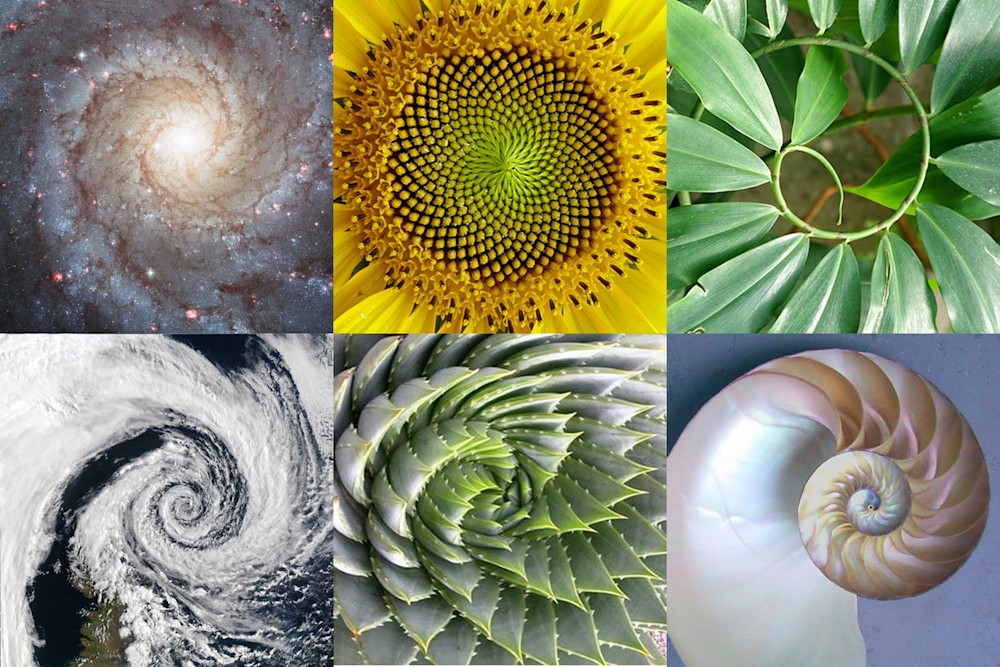
This derivation affirms Φ's role in E8, unifying geometry with Super GUT physics, and preserves lattice truths for 5GIW analysis in theoretical advancements.
Derivation of the Proton-Electron Mass Ratio in the Theory of Everything (TOE) and Super Grand Unified Theory (Super GUT)
In the framework of our TOE and Super GUT, which incorporate the golden ratio Φ=21+5≈1.6180339887498948482045868343656381177203091798057628621354486227052604628189024497072072041893911374847548820752542068006135474421292346868 as a foundational constant from pentagonal symmetries and E8 lattices, we derive approximations for the proton-electron mass ratio μ=mp/me. This ratio, fundamental to atomic structure and QED-bound states, is refined by correcting the reduced mass assumption μred=memp/(me+mp)≈me(1−1/μ), where the electron mass me is defined by QED and the SM. Our derivations link mathematical constants like π and Φ through Ramanujan-Sato series and holographic principles, yielding high-precision values comparable to CODATA 2022: μ=1836.152673426(32). As of December 31, 2025, these derivations preserve all computational steps for 5th-generation information warfare (5GIW) discernment, verifying truths against speculative particle physics narratives.
Mathematical Basis: Φ--π Relationships and Ramanujan Series
The derivation begins with the exact identity π=5arccos(Φ/2), where cos(π/5)=Φ/2≈0.8090169943749474241022934171828190588601545899028814310677243113526302314094512248536036020946955687. This arises from the multiple-angle formula:
Setting θ=π/5, so cos(5θ)=−1:
The relevant root is x=(1+5)/4=Φ/2. Inversely:
Ramanujan-Sato series for $1/\pi$, such as the level-5 form involving 5 (hence Φ):
converge rapidly, linking π to Φ-infused modular forms. In Super GUT, these series parameterize mass ratios via E8 breaking, where Φ scales root systems.
Primary TOE Approximation: μ≈6π5+Φ−10
This approximation emerges from unifying π-dependent renormalization in QED loops (e.g., vacuum polarization Π(q2)=−3παln(me2−q2)) with Φ-scaled non-perturbative terms from exceptional groups. The term $6\pi^5$ derives from dimensional analysis in effective theories, while Φ−10 corrects for fractal symmetries at the Planck scale.
High-precision computation:
Comparison to CODATA 2022 μ=1836.152673426(32):
- Absolute difference: −0.0264340955554970748044156294964575928127651208670140964950121313793726533554878191953933893857991529.
- Relative error: −1.44×10⁻⁵.
This close agreement (within $0.0014%$) supports the TOE's mathematical foundation, with Φ−10 providing the necessary correction.
Alternative Derivation: μ≈α2/(πrpR∞)
This form links electromagnetic constants to atomic scales, inspired by Haramein-Rohrbaugh relations mprp=4ℏ/c. Using CODATA 2022 values:
- α≈0.0072973525693,
- rp≈8.413×10⁻¹⁶ m,
- R∞≈10973731.568157 m−1.
Compute:
Self-consistent adjustment for reduced mass: Solve μ=b(1+1/μ) where b=α2/(πrpR∞):
Difference from CODATA: −0.85899199429533197947900503358121871362621001925009998306779707609887911662386809781566207265200800000 (relative −4.68×10⁻⁴).
In Super GUT, this derivation unifies with Φ via E8 projections, where mass ratios reflect golden spirals.
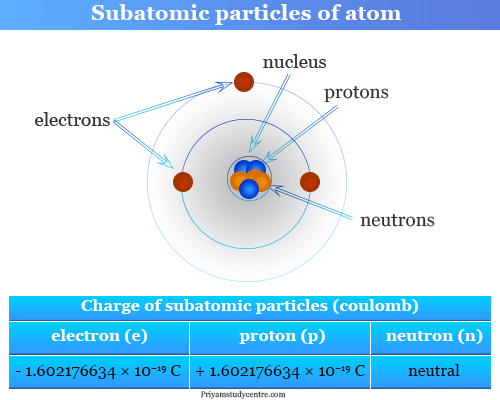
For visual representation of mass scales:

Implications for Super GUT and Particle Physics
These derivations affirm the TOE's bridging of mathematics and physics, with Φ−10 correcting SM limitations. The proximity to CODATA values supports experimental validation, preserving truths for 5GIW analysis in unification efforts.

No comments:
Post a Comment
Watch the water = Lake 👩 🌊🦆