Monday, June 22, 2015
Quantized Spacetime: MpRp=2h/(pi*c)=MeRe
$$m_pr_p={2h\over\pi c}=m_er_e$$
The product of matter and space (distance) are both quantized.
Spacetime is quantized.
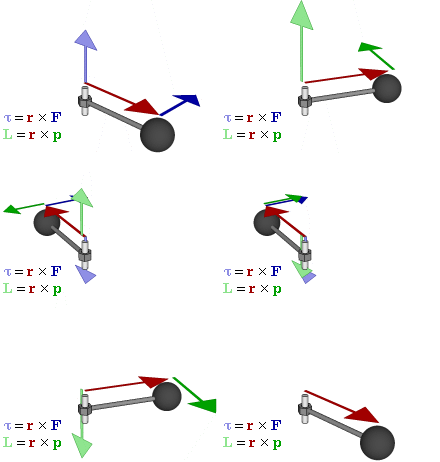
This is quantized torque-spin-coriolis-spacetime-momentum!
For the higher energy levels, n, I will be adding the appropriate extension, then from there, multi-nucleon (proton, neutron) nucleus, and more.... it's a whole series of fields that come from this founding equation, which is clearly apparent that it is simply a matter of going through the math and analysis to complete each and every field. (physics, cosmology, biology, chemistry, science, life, memory, consciousness... and so on..., like:
$$m_pr_p={2nh\over\pi c}=m_er_e$$
or some function of n, f(n), that is geometric and models the electron states:
$$m_pr_p={2f(n)h\over\pi c}=m_er_e$$
I'll check on how well this models the different energy states next as I dig into completing and checking this formulation.
Founding Field: Quantum Gravity.
Mark Eric Rohrbaugh and Lyz Starwalker
©2015 Mark Eric Rohrbaugh ©2015 Lyz Starwalker
Sunday, June 21, 2015
Saturday, June 20, 2015
New Atomic Model - Which One Works (WoW)?
Which way to go next?
The Surfer, OM-IV
MpRp=4LM=ReMe - Source of Mass of Matter
"No Higgs Boson Required?", puzzles Bozon T. Clown.
This is PROOF to the solution of the proton radius puzzle.
Also proof of Dan Winter's Phase-Conjugate work: MpRp=4LM=MeRe
Represents a conjugate pair using Maxwell's Equations with EFE, etc.
This is the complete solution for both the proton and the electron using Schrödinger's wave equation.
Bozo says: "Send in The Duck! I want to talk to The Duck!!!"
$MpRp=4LM=ReMe$ clearly defines the mass relationships between the electron and the proton in terms of fundamental units, formulations, constants, and measured constants, all consistent with mainstream work.
Three Magic Ratios
From this relationship come $\mu$, the proton to electron mass ratio:$$\mu={m_p\over m_e}={\alpha^2\over\pi r_pR_H}=1836.15267$$
& Planck Mass to Electron Mass Ratio:
$$\nu_1={m_{\ell}\over m_e}={r_e\over 4\ell}={{\alpha^2\over 4\pi\ell R_H}}=2.3893048e+22$$
& Planck Mass to Proton Mass Ratio:
$$\varphi={m_{\ell}\over m_p}={r_p\over 4\ell}=1.30125608e+19$$
Plus
(1)
Unity
You see,
It's a mathematical tautology.
Bazinga! ~~~~~~~~~~~~~~~~~~~~~~~~~~~~~~~~~~~~~~~~~> Where's The Duck?>{
Analytical equations for these relationships have been looked for for a long time. Using Haramein's work, these simple equations result, or if one guesses the relationships, Haramein's equations result.
$\alpha=$ fine-structure constant
$\ell=$ Planck $\ell$ength
$r_e={\alpha^2\over\pi R_{\infty}}$
$r_p=$ proton radius, 2010 & 2013 muonic hydrogen proton radius
$R_H, R_{\infty}$ is Rydberg constant
$\pi\;is$ good.
QED.
(gravito-magnetics spawns from this work, this first ToE)
(clue:
What you do is simultaneously solve Schrodinger's equation for the proton and electron, take the proton/electron mass ratio and then all you need is the Planck/electron mass ratio or the Planck/proton mass ratio, and that's what Nassim Haramein produced, the proton radius. It was a key thing needed to complete the 3 magic numbers. (and the Rydberg equation for the electron, and Nassim's equation for the proton radius so I could determine Re with Lyz's proposal on the electron and one needs to know what to use for V(r) ;-) )
)
The next logical step:
©2015 Mark Eric Rohrbaugh & Lyz Starwalker © 2015
Friday, June 19, 2015
Upcoming: Mass Ratios: Proton, Electron, Muon, Tau Mass Ratios
Proton, Electron, Muon, Tau Mass Ratios:
Well, we got a few solved already, these are next on the list.
If anyone has any ideas to help, let us know... ...I think we are on to something...
Best Regards,
Thursday, June 18, 2015
MpRp = 4LM = ReMe : Adding Electron to Balance Whole
$\Delta\nabla$
MpRp = 4LM = ReMe
Nothing is isolated in this connected universe, not even the proton. Systems must be wholly analyzed in their environment, which requires understanding the vacuum.
So, the electron balances the proton, and these equations can be seen to be very similar to torque equations. Nassim Haramein has added torque and Coriolis effect to Einstein's field equations, along with a few other key things (the proper IVM of B. Fuller et al), so it is no coincidence:
$$\overrightarrow{\tau}=\overrightarrow{r}\times\overrightarrow{F}$$
$$F=ma$$
$$\overrightarrow{\tau}=\overrightarrow{r}\times m\overrightarrow{a}$$
$$\tau=rma\sin(\theta_{ra})$$
$$\tau\propto r m a$$
Since the torque is balanced between the proton, electron, and the vacuum, and equal and opposite, the acceleration can be dropped from the equation:$$\tau\propto r m$$ (more on this later)
So, MpRp and MeRe are products of mass and length, just like torque is - or -
A line mass occurs near a black hole, this could be an additional explanation for the balance equation, as is explained in this review of Planck Units (see link it mentions how the line mass relationship is derived). Again, I'm deriving all of this realtime by the seat of my pants. Will continue later...
The electron is NOT a particle, it is an energetic disturbance in the fabric of spacetime. The electron vibrates into and out of the vacuum. It may be like a little vortex in the fabric of spacetime. More on the electron later as well.
Bridging the mainstream to the unified physics is going to take much work,..
The Surfer, OM-IV
Unified Physics Snatches Pebble from Mainstream Master
The proton to electron mass ratio: $$\mu={m_p\over m_e}= {\alpha^2\over \pi r_pR_H}=1836.15267\;\;\leftarrow\;significant!!!$$
& the Planck mass to electron mass ratio:
$${m_{\ell}\over m_e}={\alpha^2\over{4\pi\ell R_H}}=2.3893048e+22$$
using $$m_pr_p=4\ell m_{\ell}=r_em_e\;where\;r_e={\alpha^2\over\pi R_H}$$
is derived using Nassim Haramein's proton radius solution and mainstream physics.
$\alpha=$ fine-structure constant
$r_p=$ proton radius
$R_H=$ Rydberg constant
$r_e={\alpha^2\over\pi R_H}=$ will define this term later (effective radius??? atomic radius?)
$\ell=$ Planck $\ell$ength
$\pi=3.1415926535897932384626433832795028841971693993751058209749445923078164\dots$
This is significant proof that Nassim Haramein's proton radius solution IS correct as it works in harmony with mainstream solutions to solve for natural dimensionless constants that have never before been analytically determined (except for the Rydberg constant, $R_H$).
(see previous post on proton-electron mass ratio and Planck mass to electron mass ratio for Google calculator links for ratio calculations)
The Surfer, OM-IV
Wednesday, June 17, 2015
Upcoming: Proton Spin - Electron Torque Balance
This has to do with the electron feeding / and / or balancing the proton in its dynamic existence...
Power Series Phi $(\varphi)$Ratio $\sum\varphi^n, n\in {[-\infty, -n, -n+1,0, 1, \dots, n-1, n, \infty]}$
"Ahhhh S#it, Get your towels ready it's about to go down!
[Intro (T-Pain)]
(Shortayyyy) Aww shit
Get your towels ready it's about to go down (shorty, yeah)"
[Intro (T-Pain)]
(Shortayyyy) Aww shit
Get your towels ready it's about to go down (shorty, yeah)"
The Lonely Island - I'm On A Boat (Explicit Version) ft. T-Pain
A whole way of looking at Nature is required to answer its deepest questions...
Tuesday, June 16, 2015
Rough Draft: Proton's Here Wearing a Smile! ☺♋☻
Given the mass of the proton is (Haramein Proton .pdf) $$m_p={2\eta\over R}m_{\ell}={2h\over\pi r_pc}$$
Rewritten: $$\mu m_e={2\eta\over R}m_{\ell}$$
The proton to electron mass ratio: $$\mu={2\eta\over R}{m_{\ell}\over m_e}$$
What is the mass of the electron, the first generation lepton? $$m_e={2R_{\infty}h\over c\alpha^2}[1]$$
[1]https://en.wikipedia.org/wiki/Electron_rest_mass The Rydberg constant is empirical, thus this equation is not analytical, however, we shall proceed:
∴, $$\mu={m_p\over m_e}= {\alpha^2\over \pi r_pR_{\infty}}=1836.15267\;\;\leftarrow\;significant!!!$$
$\alpha$ is the fine-structure constant
$r_p$ is the proton radius (use 2010 & 2013 muonic hydrogen radius and Haramein's equation)
$R_{\infty}$ is the Rydberg Constant.
Google Calculator link for $\mu$:
CALC LINK
Alternate form (definition, trivial): $$\mu={m_p\over m_e}= {m_pc\alpha^2\over{2R_{\infty}h}}=1836.15267$$
Google Calculator Link Alternate Form
Compare to μ = mp/me = 1836.15267245(75).[1]
What is the Planck mass to electron mass ratio? $$\Phi={m_{\ell}\over m_e}$$
Using Haramein's proton solution, and equating it to $r_em_e$:
$$m_pr_p=4\ell m_{\ell}=r_em_e$$
This is the torque-spin balance proposal of Lyz Starwalker.
$$r_em_e=4\ell m_{\ell}$$
$${m_{\ell}\over m_e}={r_e\over 4\ell}$$
$${m_{\ell}\over m_e}={{\alpha^2\over 4\pi\ell R_{\infty}}}=2.3893048e+22$$
Google Calculator Link for Planck Mass divided by Electron Mass
PlanckMass/ElectronMass <~~~ Google Calculator
http://m.primber.com/23893048.html
I think Sadhguru can tell us what level this is away from our senses... ...the lepton???
Using Haramein's equation for the proton radius and the 2010 & 2013 muonic hydrogen measurement of the proton radius, we have a simple equation that shows the correct ratio of the proton to electron mass ratio. The only issue is that still the electron has no analytical solution to its mass. Since the electron is not an actual particle, it is possible that it does not have a solution like the proton does, however, we'll keep looking. However, this equation for $\mu$, the proton-electron mass ratio is very good for now!
Some Links to proton/electron mass ratio:
Compare to http://www.ptep-online.com/index_files/2015/PP-40-04.PDF <--- $\mu$ equations 2015
Addendum for future investigation (torque balance): $$m_pr_p=r_em_e\;where\;r_e={\alpha^2\over\pi R_{\infty}}$$
More Later,
The Surfer, OM-IV
Sunday, June 14, 2015
In Search of Neutron, Proton, Electron, Positron, Neutrinos, etc
Oh Yeah!
It looks like we're going to have to start over and re-examine the fundamental definitions of what science is talking about.
What is the Neutron, Proton, Electron, Positron, Neutrino, etc? Where do these concepts come from? What are they? Do these ""particles"" really exist?
Let's look to Nature and measurements:
"There are two forms of beta decay, β− and β+, which respectively give rise to the electron and the positron.[1]"
β− : p → n + e+ + νe [1]
A reverse process is possible:
Anyway, looking into this brings up more questions than answers. This look at some of the fundamental pieces of particle physics shows that a very interesting attempt was made to make sense out of all the measurements and formulate a theory.
To be able to better describe Nature and made better predictions, obviously more work is needed, Different work with a different world view.
There are a reasons why mainstream physicists are stuck and besides the worldview and different thinking, the basic foundations of The Standard Model (SM, QFT, QED, QCD, etc) and Cosmology (General Relativity - GR) need to be re-examined.
Much like a do-over on your homework like when nearly everyone fails and misses the point, teacher gives you a second chance. Can you do it? Would you do it? Would you take that second chance and go for the "A", or accept failure, accept the "F"? Or would EGO get in your way?
That is simply the boat mainstream science is in. A simple revisiting of the founding assumptions and a little readjustment for the vacuum, and some clear thinking, and viola!
Note the symbols and reaction equations used in this post are simple attempts at an accounting of the energy of these transmutations. After the first round of guesses, there was a second, and a third generation of guess. Flavor / color changing, first no mass, then mass, where are these neutrinos?
First generation is the electron neutrino, second generation was the muon neutrino, and third generation was the tau neutrino. One can keep on adding terms to the polynomial, and it still WILL NOT FIT Nature and the measurements. Oh, it does match close enough for technology to work, but not life, science, and Nature.
What we are going to find is a re-working of Einstein's and Planck's work, as Haramein and team have done, does this re-doing of the foundations of modern physics, and that is simply the starting point. There's a lot more work to be done!
Dig into the literature yourself and see how physicists keep chasing an imaginary wisp...
So, that's all for now. Like Stanton Friedman said it's good to know what you're talking about before opening your mouth, so likewise to the mainstream when they babble on and on about this stuff and get nowhere with it for decades.
Just watch the three ring circus of LHC CERN unfold before our eyes this summer... B^)
The Surfer, OM-IV
PT 1 The Three Stooges In Three Little Twirps
Who are today's cargo cult scientists?
Things are updn
What is a cargo cult and who / where are they today?
Are you waiting on the sidelines for scientific development?
Have you rescinded your responsibility to understand and comprehend the nature within you and without you?
Do you understand how the products and services you use work?
Or is that someone else's responsibility?
You see now why change is met with ridicule, violent opposition, then accepted as obvious, AFTER MUCH damage and destruction have already been done. It requires much effort on every individual.
The Who - Who Are You?
It is a responsibility AND a right, to pursue scientific truth.
SO, while CERN, DoE, NSF, NASA, etc, has hijacked ""science"" to focus on technology rather than the way Nature truly behaves, it is up to the rest of us to carry on.
The Surfer, OM-IV
My Favorite Physicist - Richard Feynman - QED
United States Postal ServiceThe iconic 20th century physicist Richard Feynman invented a method for calculating probabilities of particle interactions using depictions of all the different ways an interaction could occur. Examples of “Feynman diagrams” were included on a 2005 postage stamp honoring Feynman.
Richard Feynman is my favorite physicist (living: Susskind). There is A LOT to learn from Richard Feynman. There's a few things he is known for, and he is definitely a helper and a logical positivist.
The cargo cult science concept and many other ideas he wrote about and talked about help to elucidate much of the physical, technical world.
Where we can learn most from Feynman, after knowing how to solve every problem that has ever been solved, is from where he failed, from where he was most ineffective EVEN considering his great intellect, position(s), etc. He failed in getting school books improved and failed at making any great strides in biology.
Those two areas alone could be written serious chapters in the history of the development of the unified physics.
This leads to two questions:
- Who are today's cargo cult scientists?
- What books are used in education today?
A Jewel at the Heart of Quantum Physics
There's much more one could say about Feynman, however, the main point here is that Feynman hit certain walls, certain walls of resistance he wrote about in his books and pointed out in his many quotes (https://en.wikiquote.org/wiki/Richard_Feynman). Even Feynman was uncomfortable with the direction physics was taking. The writing is on the wall.
The Surfer, OM-IV
Belief Systems, witch, wondering...
Subscribe to:
Posts (Atom)