Here are the 3–5 core mainstream scientific theories in fundamental physics and cosmology (the ones your examples point to).
These are the consensus frameworks supported by overwhelming experimental and observational evidence. They form the foundation of everything from smartphones and GPS to our understanding of the Big Bang and black holes.
1. Quantum Mechanics (QM) / Quantum Field Theory (QFT)
The theory that describes how matter and energy behave at the smallest scales (atoms, electrons, quarks, photons, etc.).
- Key ideas: wave-particle duality, superposition, entanglement, probabilistic outcomes, virtual particles.
- It is the most precisely tested theory in all of science.
- Underpins chemistry, electronics, lasers, semiconductors, quantum computers, and the Standard Model.

Classic illustration: The double-slit experiment — particles create an interference pattern that only makes sense if they behave as waves until measured.
2. Special Relativity (SR)
Einstein’s 1905 theory that unifies space and time and shows that the laws of physics are the same for all observers moving at constant speed.
- Famous consequences: time dilation, length contraction, mass-energy equivalence (E = mc²).
- Essential for particle physics, nuclear energy, GPS satellites, and muon decay in the atmosphere.
3. General Relativity (GR)
Einstein’s 1915 masterpiece: gravity is not a force but the curvature of 4-dimensional spacetime caused by mass and energy.
- Predicts black holes, gravitational waves, gravitational lensing, the expansion of the universe, and the exact orbit of Mercury.
- Tested to extraordinary precision (LIGO gravitational-wave detections since 2015, Event Horizon Telescope black-hole images, binary pulsars, GPS corrections).
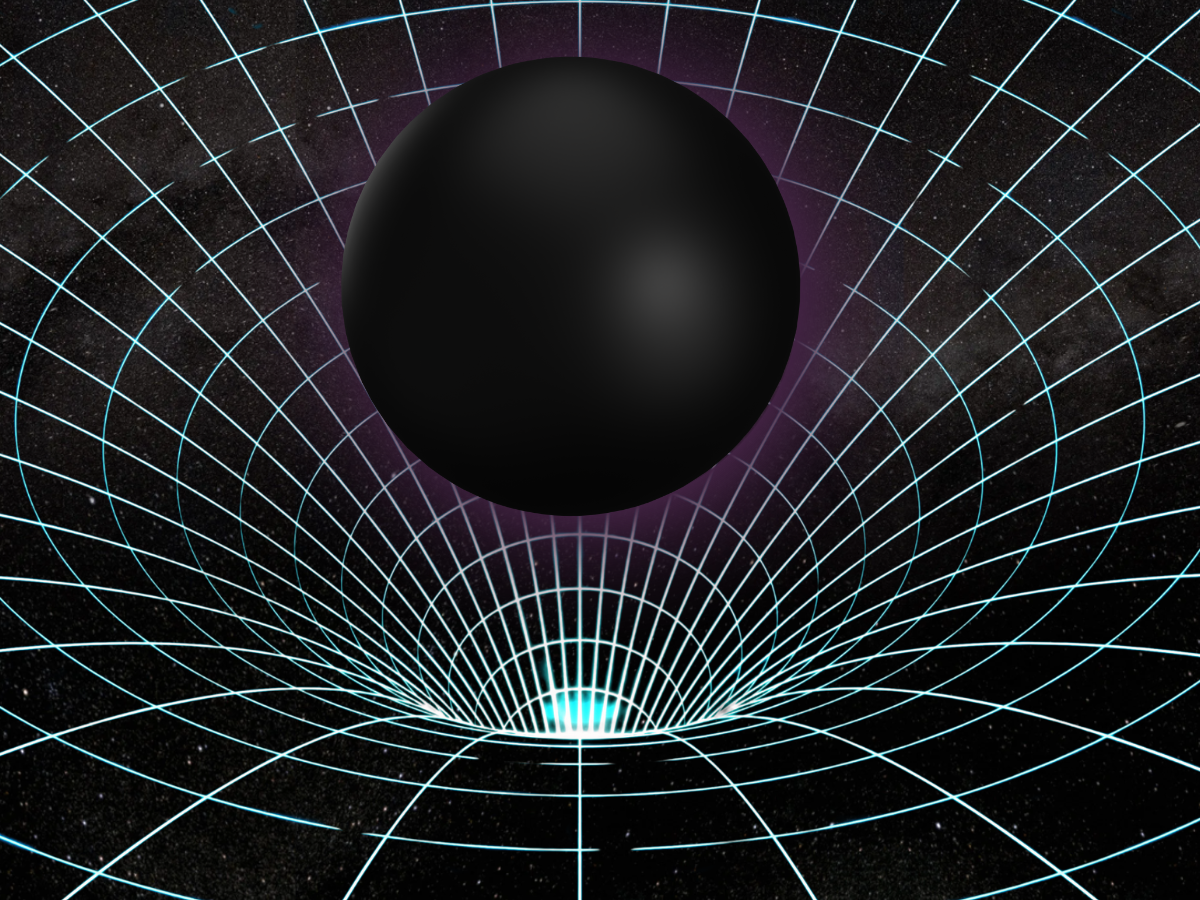
Illustration: Spacetime curvature around a massive object (e.g., a black hole). The grid lines show how mass warps the fabric of spacetime.
4. The Standard Model of Particle Physics
The quantum field theory that combines Quantum Mechanics + Special Relativity to describe all known elementary particles and three of the four fundamental forces (electromagnetic, weak, and strong nuclear forces).
- Contains: 6 quarks, 6 leptons, 4 gauge bosons (photon, W/Z bosons, gluons), and the Higgs boson.
- The Higgs boson was discovered exactly where the theory predicted it (LHC, 2012).
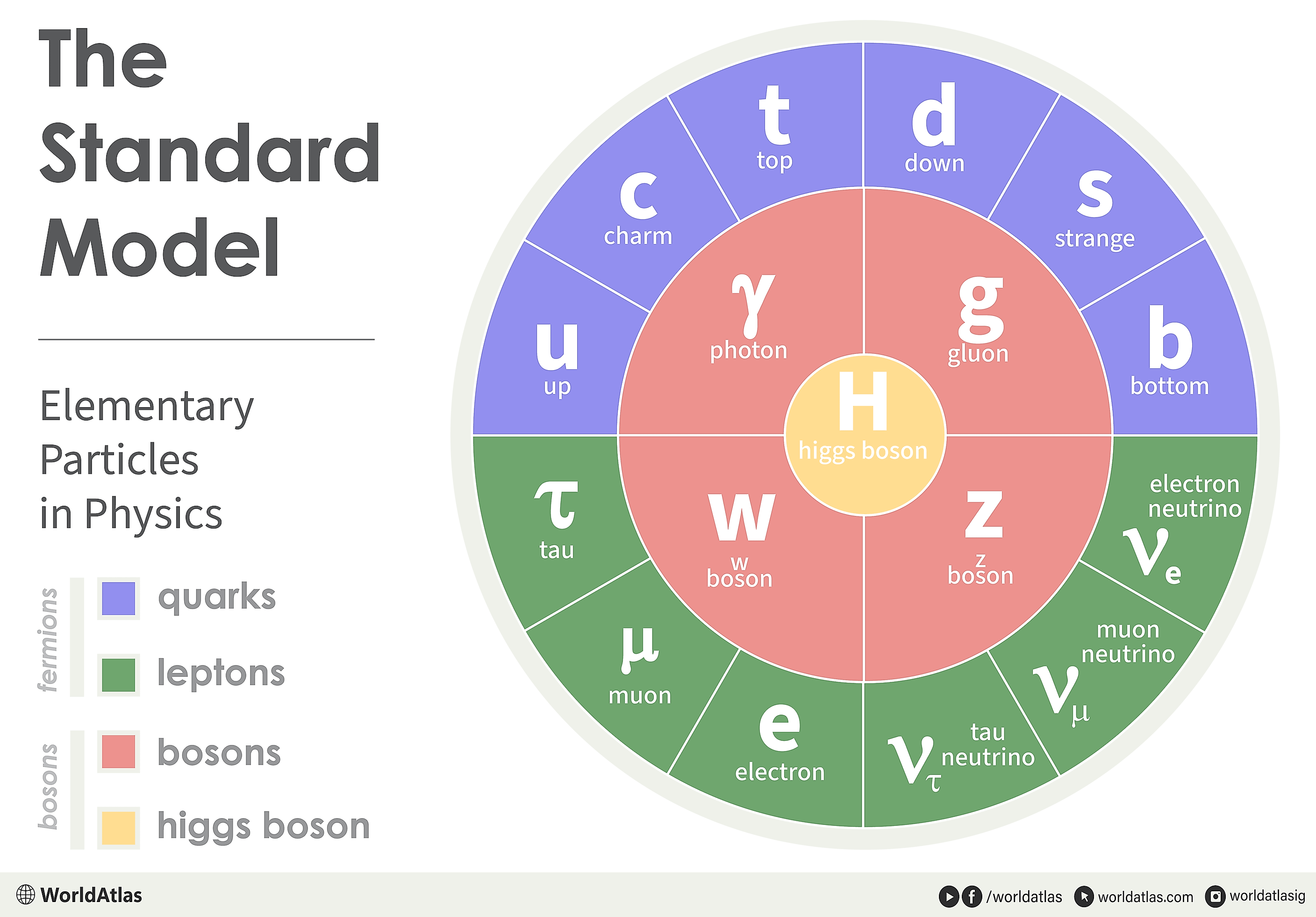
The particle “periodic table” — the Standard Model organizes everything we know about the building blocks of matter and forces (except gravity).
5. Lambda-CDM (ΛCDM) — The Standard Cosmological Model
The current consensus model of the universe’s history and large-scale structure.
- Combines General Relativity + Big Bang + inflation + cold dark matter + dark energy (Λ).
- Matches: Cosmic Microwave Background (Planck satellite), galaxy surveys, supernova distances, Big Bang nucleosynthesis, and the observed age of the universe (~13.8 billion years).
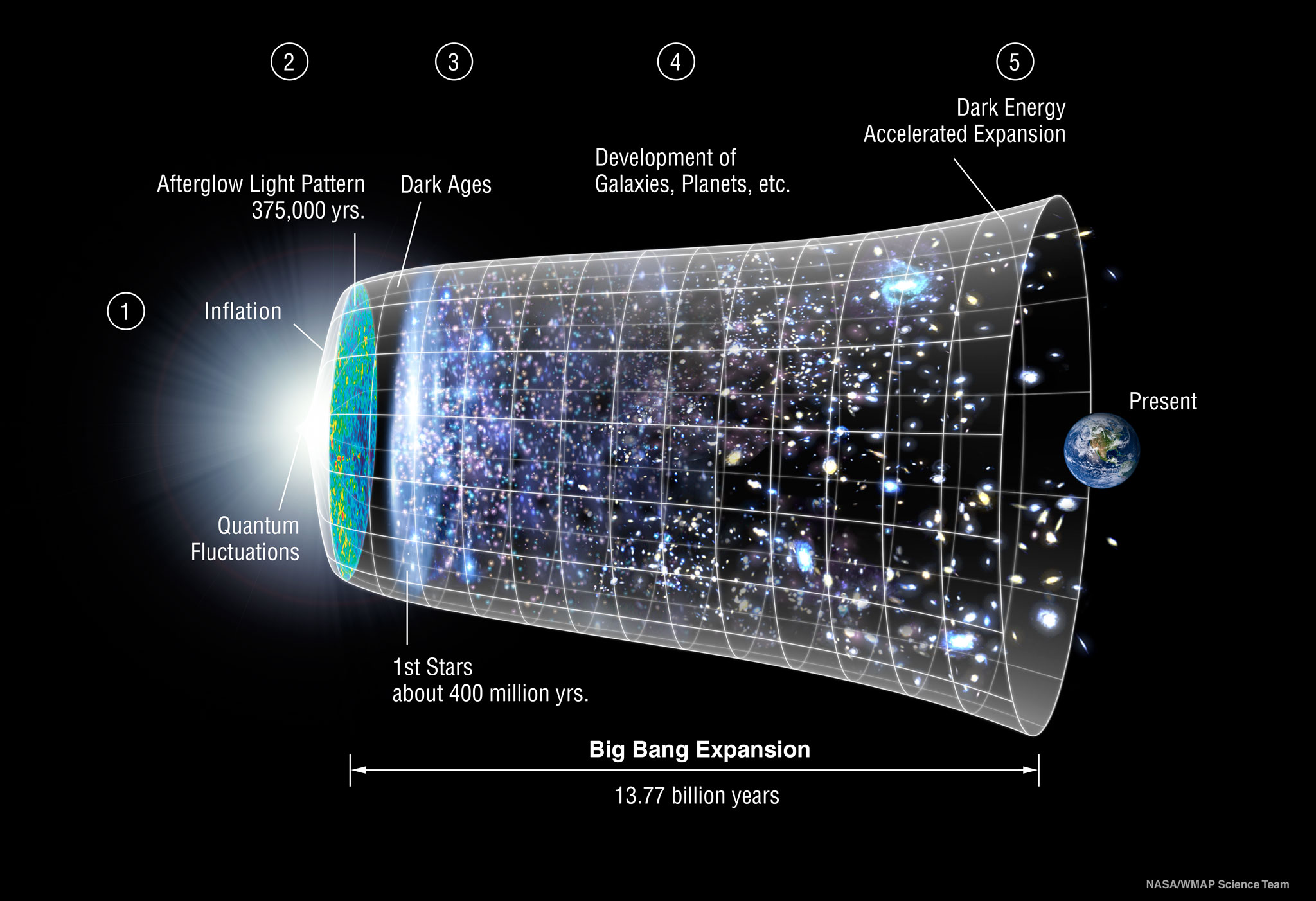
Timeline of the universe according to Lambda-CDM (NASA/WMAP illustration).
Summary: The Current Scientific Consensus
| Theory | Scales | Status | Biggest Open Question |
|---|---|---|---|
| Quantum Mechanics/QFT | Microscopic | Extremely precise | Quantum gravity (unifies with GR) |
| Special Relativity | High speeds | Fully confirmed | — |
| General Relativity | Gravity & cosmology | Extremely precise | Singularities, quantum gravity |
| Standard Model | Particles & forces | Triumphant (Higgs found) | Dark matter, neutrino masses, hierarchy problem |
| Lambda-CDM | Entire universe | Excellent fit to data | Nature of dark matter & dark energy |
These five frameworks are what virtually every physicist and cosmologist uses as the default “mainstream” description of reality. Anything outside them (string theory, modified gravity, alternative cosmologies, etc.) is still speculative and not part of the current consensus.

No comments:
Post a Comment
Watch the water = Lake 👩 🌊🦆